29.10.09

David Bowie: 40 Years

An anniversary retrospective
David Bowie as the Thin White Duke, 1976

Graeme Thomson reflects on the musical career of David Bowie, spanning four decades:
In some respects "Space Oddity" was a false dawn, widely regarded as an opportunistic novelty number timed to coincide with the moon shot. Bowie, meanwhile, never felt at ease playing the winsome acoustic troubadour. Bored by the "denim hell" and frayed authenticity of the likes of Led Zeppelin, he eventually hitched his wagon to the overt theatricality of glam rock, creating Ziggy Stardust, the quintessential Bowie construct. Incorporating elements of mime, kabuki and the droogs as portrayed in Stanley Kubrick's [A] Clockwork Orange, Ziggy was the ultimate representation of pop-star-as-alien, driven by the robust buzz-saw guitar riffs of Mick Ronson. Three years after the first, Bowie's second appearance on Top of the Pops was genuinely iconoclastic, his performance of "Starman" denoting 1972 as Year Zero for a generation of punks, Goths, new wavers and New Romantics.

Having achieved lift-off, Bowie followed through on his promise to make a "wild mutation" as a rock'n'roll star. Only five years passed between 1971's Hunky Dory and the corrupted Aryan beauty of Station to Station, but in that time Bowie bounced from hokey folk to glam to hard rock to frigid Eurodisco, mutating en route into Aladdin Sane, Hallowe'en Jack and the Thin White Duke.

Falling on each emerging trend - disco, Philly soul, electronic minimalism, new wave - as it stole into view, he was a magpie with a priceless knack for pinching ideas from the cultural margins and siphoning them into the mainstream through his own work. One biographer defined him as a "style vampire", a mannequin dressed in a series of beautiful, borrowed clothes. "Some people say Bowie is all surface style and second-hand ideas," said Brian Eno, his on-off collaborator for three decades. "But that sounds like a definition of pop to me."

He certainly looked and acted the part. Sexually voracious - when he met his first wife, Angie, in 1969 they were famously "fucking the same bloke" - he was impossibly thin and vampiric, those fangs and odd, mismatched eyes emitting an unearthly vibe. Like all great pop stars, he contrived to paint the grim grind of sustained drug-taking as a vaguely noble quest, a way of seeking new dimensions rather than making emergency repairs to a fractured psyche. In Bowie's case, mired in cocaine addiction, those dimensions involved dystopian visions where the occult, the Holy Grail and fascism met in some futuristic, Ballardian hell.

Recovering in Berlin from these nightmares in 1976 and 1977, Bowie made the most influential records of his career. Low and "Heroes" were dense, pensive, occasionally hilarious works marrying US R'n'B with the electronic Euro pulse of Neu and Kraftwerk. Lodger (1979) and Scary Monsters (1980) concluded his journey from secluded drug dependency to boisterous commercial rejuvenation, but after that his creativity crumbled. [Read More]

More information:
4.10.09

David Bowie in Berlin, 1978

Alan Yentob interviews the performer in Europe

Alan Yentob interviews David Bowie in Berlin in 1978 as part of BBC documentary arts programme, Arena. With a dramatic Berlin city backdrop, Bowie discusses the artistic experimentation of 1977's Low and "Heroes", while giving an impression of the personal difficulties that underscored their creation. Bowie also shares anecdotes regarding the simplicity of his lifestyle in Europe, compared to his busy celebrity existence in Los Angeles.

More information:
5.8.08

Pure Anecdote

On my fascination with biography
Samuel Beckett

French philosopher Jacques Derrida once introduced a seminar on autobiography with a quote by Martin Heidegger; speaking on the life of Aristotle, Heidegger had said, 'he was born, he thought, and he died. The rest is pure anecdote.' And it's an interesting point to make. Regardless of what Aristotle may or may not have done during his lifetime, all that is relevant to us is the work he left behind.

Aristotle's ideas form some of the central touchstones of Western philosophy, and continue to influence our understanding of who we are and where we are going. Do we really need to know what the man ate for breakfast?

While visiting art galleries in Berlin during his youth, Samuel Beckett made a point regarding conjecture and speculation in history books. He wrote in one of his travel diaries:
"I am not interested in a 'unification' of the historical chaos any more than I am in the 'clarification' of the individual chaos, and still less in the anthropomorphisation of the inhuman necessities that provoke the chaos. What I want is the straws, flotsam, etc., names, dates, births and deaths, because that is all I can know."
The rest, as Heidegger suggests, is at best pure anecdote; at worst, wild speculation. The lives of historical figures will always remain a mystery to us, despite our best efforts to uncover hope for the contrary. I can read a biography of Franz Kafka. I can read two, or three. I can read Kafka's private journal. If I was so disposed, I could even read letters to his friends, family and loved ones. But all the details I would accumulate, and all the facts I could list, would still read cold off the page. They don't bring me any closer.

But what is it that makes me scurry off in search of these biographies, authorized and unauthorized alike? Is it my attempt to get to the heart of a man or a woman that has held my attention so closely, and do I really think I'll succeed? Does it really make a difference if there's a selection of black-and-white photographs from someone's personal archive on the central pages? Will I know them any better? Do I really want to?

I suspect that I track down autobiographies when I feel an affinity for someone's art. That's where it all begins. I might listen to a Miles Davis or a John Coltrane record, and hear something that speaks to me in some way. I wonder what this sensation is, this sense of recognition, and hope that knowing the artist in more depth might reveal something more. Perhaps it will explain something to me about myself, and why I am drawn to it.

I often I feel I can identify with the people I read about, and it gives me a sense of comfort and satisfaction to find a kindred spirit with similar preoccupations. But the end result is always the same: at the end of the book I become at least partly disillusioned with the life and return to the original work. What is it people say about meeting your heroes? Ultimately, it's not Miles Davis that holds my interest, but his music.

I'm currently reading James Knowlson's biography of Samuel Beckett, Damned to Fame, and I'm repeating the same process all over again. I'm a huge fan of the writer's plays, novels, poetry and short stories, and for years I've been interested to know more about the creator. His work has, like Kafka's, always felt close to me, so I was keen to discover whether I would form a similar impression of the man himself.

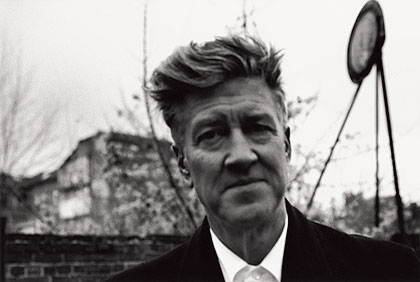
David Lynch

I'm finding that there are dozens of facts about Beckett's life that I identify with very strongly, from similar personal experiences to shared opinions and outlooks. And these small details accumulate to form a satisfying feeling. However, before I even finish the book I can tell you that there's something missing. Not only is there a vast wealth of detail that I do not relate to, and on some level choose to overlook or ignore, but the facts ultimately do little more than emphasize Beckett's absence. The biography, after all, is not the man. More shocking still, neither is the work.

It is often tempting to uncover what an artist thinks about their work, to gain a greater appreciation of the qualities that drew you to it in the first place. But it's easy to forget that we might not agree with the author's interpretations of his or her work, and that it might conflict quite strikingly with opinions of our own.

Interviewed by Mark Cousins in the late 1990s, director David Lynch was asked for his interpretation of scenes from some of his films. The releases shown included Blue Velvet, Elephant Man and Fire Walk With Me, a film that accompanies the Twin Peaks television series. Lynch admitted that all of his films have meant something deeply personal, but declined to reveal anything on camera. Instead, he focussed on the importance of the audience becoming involved with the films for themselves, and drawing their own conclusions. 'It's a beautiful thing,' he said.

And I can't help but agree. That's not to say I won't stop reading biographies, mind you. Old habits die hard, after all. But I'm no longer in search of any authoritative answers to my big questions. After all, a biography can only offer us the facts, pure anecdotes and wild speculations. Why settle for someone else's when you can have your own?
3.8.08

Die Brücke

One of the great artistic movements of the 20th Century
Die Brücke

A few years back a friend and I decided to spend a week in Berlin. We followed the tourist handbooks and navigated our way through the city. After a few days, with growing confidence, we even began to explore with the guidebooks tucked away in our pockets, and gradually started to establish our bearings. I loved the experience, and to this day I feel that Berlin is one of the greatest places I've ever visited.

I found it amazing to see the way Berlin accepts and adapts to its own history: a history that shaped much of twentieth-century Europe, and which manifests itself in every street and every square of the city. There are so many signifiers of a dark and troubling past, amid so much optimism and urban development. The collision of the present with the past, light with dark, was often more than a little on the uncanny side.

We saw bars and restaurants located around Checkpoint Charlie, where tourists can sip a cold beer and contemplate the divide; fragments of the Berlin wall outside shopping malls and train stations; and memorials and high-rise buildings constructed over underground caverns of Nazi administration. Walking through the city was, at times, awe-inspiring, and at others it was frightening.

It was in Berlin that I first came across the work of Ernst Ludvig Kircher, Ernst Heckel and Karl Schmidt-Rottluff, painters of the Die Brücke expressionist movement. Their name, literally meaning 'the bridge', derives from a desire to merge traditional artistic techniques with the evolving avant garde movement. I was initially drawn to investigate the group while reading about David Bowie, who emulates the pose of Heckel's Roquairol on the cover of his Berlin album "Heroes". Iggy Pop strikes a similar pose on the cover of his album, The Idiot, released the same year.


Despite their expressionist techniques, I always saw a certain realism in their work that always appealed to me. I was drawn to the lone figures, that seemed to be trying to comprehend their surroundings. At times I was reminded of some of Kafka's short stories, at others I thought of Edward Hopper's anonymous city dwellers, but sometimes I didn't think of anything specific. I just daydreamed. That was what I loved about them.

I was reminded of Die Brücke again just recently, while reading James Knowlson's fantastic biography of Samuel Beckett, Damned to Fame. In the mid-1930s, as national socialism began to gain momentum, Beckett embarked on a kind of cultural pilgrimage, touring the museums and art galleries of Germany.

Ironically, many of the modern pieces that interested Beckett most, including those of Kirchner, Heckel and Schmidt-Rottluff had recently been declared decadent by the Third Reich and were taken out of the public eye - either to be stored, bought by private collectors or destroyed. Beckett witnessed the censorship first-hand, and was appalled to meet painters and artists who were suffering from the new policies. But despite this, Beckett did find numerous opportunities to see the works he had been looking for, and retained an interest in the Die Brücke movement, and painting in general, all of his life.

Lying in bed this morning, I spent some time in a dreamless haze, watching the sun move gradually up the wall. I was contemplating the morning coffee, but couldn't quite find the motivation to get up and do something about it. It was at this point that I noticed some of the postcards that have been tacked about the place, here and there, to give my room a bit of colour. Two such postcards were bought from an art gallery gift shop in Berlin: two paintings by Kirchner. I decided to make myself a fresh pot of coffee and go in search of some more paintings online.

And I found them. The Museum of Modern Art in New York is currently holding an exhibition of Ernst Ludwig Kirchner's work. There is a website filled with great examples of his painting, and plenty of information about his life and that of the Bridge movement. You can see it for yourself by clicking here.