3.2.14

On Rising Early and Artistic Success

Mason Currey shares details of artists' lives on Slate

From Mason Currey (Slate), author of the excellent Daily Rituals:
A friend of Frank Lloyd Wright’s once observed that for as long as she had known him, the architect seemed to spend the day doing everything but actually working on his building designs. He held meetings, took phone calls, answered letters, supervised students—but was rarely seen at the drafting table. The friend wanted to know: When did Wright conceive the ideas and make the sketches for his buildings? “Between 4 and 7 o’clock in the morning,” Wright told her. “I go to sleep promptly when I go to bed. Then I wake up around 4 and can’t sleep. But my mind’s clear, so I get up and work for three or four hours. Then I go to bed for another nap.”

Wright was hardly unusual in this habit. In researching Daily Rituals, I came across story after story of creative artists who did their most important work—and sometimes their only work—just as the sun was rising. (Of the 161 figures in the book, about a third got up at 7 a.m. or earlier.) If I were going to extrapolate one lesson from the book, it would be this: Get up early and go straight to work, making a cup of coffee if you like but not doing much else before sitting down, and take advantage of that time before the myriad demands of daily life have a chance to take hold.

Indeed, many artists are early risers because they have little other choice; working early in the morning is a tried and true method of fitting creative work into busy schedules. The 19th-century novelist Frances Trollope is a good example. She did not begin writing until the age of 53, and then only because she desperately needed money to support her six children and ailing husband. In order to squeeze the necessary writing time out of the day while still acting as the primary caregiver to her family, Trollope sat down at her desk each day at 4 a.m. and completed her writing in time to serve breakfast. Her son Anthony Trollope later adopted a similar schedule, getting up at 5:30 a.m. and writing for two hours before going to his job at the post office. (Later in this series, I’ll be looking closely at artists who also held down full-time day jobs.)

Fast forward to the fall of 1962 and you have Sylvia Plath following a similar schedule. At the time, she was using sedatives to get to sleep, and when they wore off at about 5 a.m. she would get up and write until her children awoke. Working like this for two months, she produced nearly all the poems of Ariel, the posthumously published collection that established her as a major new voice in poetry. [Read More]

Find Daily Rituals on Amazon: US | UK

Also at A Piece of Monologue:
16.12.13

Famous Writers’ Sleeping Habits

A visualisation of rising times set against literary productivity
Click for source
From Brain Pickings (thanks to Michael John Goodman for the link):
Over the years, in my endless fascination with daily routines, I found myself especially intrigued by successful writers’ sleep habits — after all, it’s been argued that “sleep is the best (and easiest) creative aphrodisiac” and science tells us that it impacts everything from our moods to our brain development to our every waking moment. I found myself wondering whether there might be a correlation between sleep habits and literary productivity. The challenge, of course, is that data on each of these variables is hard to find, hard to quantify, or both. So I turned to Italian information designer Giorgia Lupi and her team at Accurat — who make masterful visualizations of cultural phenomena seemingly impossible to quantify — and, together, we set out to explore whether it might be possible to visualize such a correlation.

First, I handed them my notes on writers’ wake-up times, amassed over years of reading biographies, interviews, journals, and other materials. Many came from two books — Daily Rituals: How Artists Work by Mason Currey and Odd Type Writers: From Joyce and Dickens to Wharton and Welty, the Obsessive Habits and Quirky Techniques of Great Authors by Celia Blue Johnson — as well as from the Paris Review interviews and various collections of diaries and letters.

We ended up with a roster of thirty-seven writers for whom wake-up times were available — this became the base data set, around which we set out to quantify, then visualize, the literary productivity of each author. [Read More]

Also at A Piece of Monologue:
24.3.13

Style in Theory: Between Literature and Philosophy

A new title from Bloomsbury
Style in Theory: Between Literature and Philosophy, ed. Ivan Callus, James Corby, Gloria Lauri-Lucente
From Bloomsbury Publishing:
'What, in theory, is style? How has style been rethought in literary theory?'

Drawing together leading academics working within and across the disciplines of English, philosophy, literary theory, and comparative literature, Style in Theory: Between Philosophy and Literature sets out to rethink the important but all-too-often-overlooked issue of style, exploring in particular how the theoretical humanities open conceptual spaces that afford and encourage reflection on the nature of style, the ways in which style is experienced and how style allows disciplinary boundaries to be both drawn and transgressed.

Offering incisive reflections on style from a diverse and contemporary range of theoretical and methodological perspectives, the essays contained in this volume critically revisit and challenge accepted accounts of style, and provide fresh and compelling readings of the relevance in any rethinking of style of specific works by the likes of Shakespeare, Petrarch, Kant, Nietzsche, Heidegger, Deleuze, Blanchot, Derrida, Nancy, Cixous and Meillassoux. [Read More]

Contributors: Jean-Michel Rabaté (University of Pennsylvania), Laurent Milesi (Cardiff University), Saul Anton (The New School & Pratt), Gloria Lauri-Lucente (University of Malta), Stuart Sillars (University of Bergen), Stefan Herbrechter (Coventry University), James Corby (University of Malta), Chris Muller (Cardiff University), Douglas Burnham (Staffordshire University), Fiona Hughes (University of Essex), Janice Sant (Cardiff University), Marie-Dominique Garnier (Université de Paris-8 Vincennes-à-St-Denis), Mario Aquilina (Durham University), Ivan Callus (University of Malta), Giuseppe Mazzotta (Yale).

Also at A Piece of Monologue:
8.11.12

Simon Critchley on the Tragic and its Limits

An interview with The White Review

John Douglas Millar (The White Review) interviews philosopher Simon Critchley:
To Critchley, one attraction of tragedy lies in ‘its savage and troubling beauty, its conflict with and superiority to philosophy, and its massive and unacknowledged relevance to the contemporary psychical and political situation.’ Since the beginning of his career he has been concerned with the antagonism between literature and philosophy, telling me earlier this year that ‘Literature was always my passion. It was what philosophy was meant to serve in a sense . . . Literature was served by philosophy rather than the other way around.’ His work on tragedy may be read in this light, and can also be seen as a model for reading the present state of permanent war in which we find ourselves. In the following interview we discussed the significance of tragedy for him, his use of collaboration as a working method, and how his latest obsession has lead to the new book. [Read More]
Also at A Piece of Monologue:
21.8.12

Simon Critchley on Contemporary Art

An article for The Brooklyn Rail
Al Held, 'The Big A' (1962)
Philosopher Simon Critchley shares his thoughts on contemporary art: '[...] despite such confusions of reference and the horrors of the contemporary art business model—or perhaps even because of it—I want to defend contemporary art, up to a point. It is simply a fact that contemporary art has become the central placeholder for the articulation of cultural meanings—good, bad, or indifferent. I am middle-aged enough to remember when literature, especially the novel, played this role and when cultural gatekeepers were literary critics, or social critics, often from literary backgrounds. That world is gone. The novel has become a quaint, emotively life-changing, and utterly marginal phenomenon. The heroic critics of the past are no more. I watched this change happen slowly when I still lived in England in the sensation-soaked 1990s and recall, as a kind of cultural marker, the opening of Tate Modern in 2000 and immensely long lines queuing up to see a vast spider by Louise Bourgeois in the Turbine Hall. It was clear that something had shifted in the culture.' [Read More]

Also at A Piece of Monologue:
17.4.12

Judith Butler: How to Read Kafka

The European Graduate School broadcasts online seminars with Judith Butler

Description from The European Graduate School: 'Judith Butler, philosopher and author, talking about how to read Kafka. In this lecture, Judith Butler discusses the relationship between philosophy and literature, how to read parables, the limits of knowledge, theology and the adequacy of the propositional form in relationship to Franz Kafka, Theodor W. Adorno, Walter Benjamin, Friedrich Nietzsche, Jacques Derrida, Georg Wilhelm Friedrich Hegel and Michel Foucault focusing on reason in history, the messiah, time, space, argumentative structure, playfulness, mediation and the figure of Christ.' [Source]


Description from The European Graduate School: 'Judith Butler, philosopher and author, talking about Kafka's parables and paradoxes. In this lecture, Judith Butler discusses the didactic function of the parable, the structure of command and the communicability and legitimacy of laws in relationship to Franz Kafka, Theodor W. Adorno, Walter Benjamin, Immanuel Kant, Jacques Derrida, Hannah Arendt, Georg Wilhelm Friedrich Hegel and Michel Foucault focusing on das Ziel, progressive history, teleology, the messianic, indeterminacy, the politics of arrival and departure, temporal progressions and spatial relations.' [Source]

Also at A Piece of Monologue:
7.7.11

After Hegel

A discussion on philosophy and critical theory
Nonsite has posted an interview with Robert Pippin, conducted by Omair Hussain of Platypus collective on 14 March 2011 (link via 3 Quarks Daily):
Robert Pippin: Hegel is the first to argue that philosophy has an historical and a diagnostic task. A traditional understanding of philosophy is distinguished by two central, normative questions, and its conviction that these questions can be answered by the exercise of pure human reason: What ought we to think, and what ought we to do? To Hegel, this conception of philosophy is insufficient and, in the Kantian sense, un-critical—that is, not aware of the conditions of its own possibility. Instead, Hegel argues that philosophy’s task is the comprehension of its own time in thought. That’s an extremely powerful and influential formulation, although it is not at all clear exactly what it means. Certainly, Hegel has in mind the self-justification of the use of coercive violence by a single authority in the state against all other members, otherwise known as politics. Under what justification could the coercive power of law, the ability to take away one’s freedom, operate? Hegel was skeptical of the “pure,” practically rational inquiry into this problem undertaken, say, by Plato’s Republic or Hobbes’s Leviathan. Human rationality, to Hegel, is not a faculty possessed by human beings, like sensibility or the imagination, which they exercise in isolation as monadic units. He thinks of rationality as the considerations we offer each other when our actions affect what others would otherwise be able to do. Rationality is a social practice and it has a history, as do the elements connected with it, such as the concept of subject or agent. [Read More]

10.1.11

Sigmund Freud: The Reluctant Philosopher

Alfred I. Tauber's new study contextualizes psychoanalysis within the history of Western philosophy

Leslie Chamberlain of the New Statesman reviews Alfred I. Tauber's Freud: The Reluctant Philosopher:
Alfred I Tauber's judgement, with which I wholeheartedly concur, is that Freud is the great architect of 20th-century moral sensibility. Tauber, a leading professor of philosophy and medicine in Boston, wants to rescue Freud from the narrow-minded scientism of the past few decades, "because he tapped in to the deepest sources of western identity and re-expressed its key tenets in terms that we might effectively apply to ourselves". Tauber's humanising mission could not come soon enough.

Freud's star began to wane in the 1970s when an emphasis on his poor science undermined the credibility of psychoanalysis. The almost graceful irony of the famed New Yorker jokes and the early Woody Allen films was eclipsed by a clunking rejection of Freud as a purveyor of nonsense, a fraud even.

Typically of a fuming new breed of academic thinker, Frederick C Crews, in his 1995 book The Memory Wars, blamed Freud for a corrupt therapeutic industry that persuaded adult patients to "remember" that they had been sexually abused by their parents. When the history of late-20th-century opposition to Freud is written, it will feature men like Crews, a former Freudian who felt betrayed and wanted science to compensate him. It will link also to the rise of neuroscience, to philosophers wanting to be cognitive scientists; and it will stress the perennial sexual anxiety generated by Freud's theory of the unconscious, which makes so many commentators angry. It may also stress that Freud was middle-class and from fin-de-siècle Vienna, and that he conditionally defended a bourgeois world.

Tauber, however, sees him as a "reluctant philosopher" who updated for the 20th century the Enlightenment ideal of self-knowledge as the key to a happier life and better social relations. A timeless figure, in short. [Read more]

Also at A Piece of Monologue
30.11.09

Daily Routines of Writers and Philosophers

A survey of distinguished authors and thinkers

I have always been fascinated by the daily rituals and routines that govern people's everyday lives. Daily Routines has compiled a wide and varied selection of such rituals, taken from interviews and biographies of some of the world's most distinguished writers and thinkers. It makes for fascinating reading - even if browsing the daily routines of others leaves little time for our own:

Paul Auster:
The usual. I got up in the morning. I read the paper. I drank a pot of tea. And then I went over to the little apartment I have in the neighborhood and worked for about six hours. After that, I had to do some business. My mother died two years ago, and there was one last thing to take care of concerning her estate—a kind of insurance bond I had to sign off on. So, I went to a notary public to have the papers stamped, then mailed them to the lawyer. I came back home. I read my daughter’s final report card. And then I went upstairs and paid a lot of bills. A typical day, I suppose. A mix of working on the book and dealing with a lot of boring, practical stuff. [Read More]

Will Self:
Rituals. Smoking--pipes, cigars, special brands, accessories, the whole bollocks. Coffee, tea, strange infusions--I have a stove on my desk. Fetishising typewriters, pens, etc. Overall, though, I have a healthy appetite for solitude. If you don't, you have no business being a writer. [Read More]

Gustave Flaubert:
Days were as unvaried as the notes of the cuckoo. Flaubert, a man of nocturnal habits, usually awoke at 10 a.m. and announced the event with his bell cord. Only then did people dare speak above a whisper. His valet, Narcisse, straightaway brought him water, filled his pipe, drew the curtains, and delivered the morning mail. Conversation with Mother, which took place in clouds of tobacco smoke particularly noxious to the migraine sufferer, preceded a very hot bath and a long, careful toilette involving the regular application of a tonic reputed to arrest hair loss. At 11 a.m. he entered the dining room, where Mme Flaubert; Liline; her English governess, Isabel Hutton; and very often Uncle Parain would have gathered. Unable to work well on a full stomach, he ate lightly, or what passed for such in the Flaubert household, meaning that his first meal consisted of eggs, vegetables, cheese or fruit, and a cup of cold chocolate. The family then lounged on the terrace, unless foul weather kept them indoors, or climbed a steep path through woods behind their espaliered kitchen garden to a glade dubbed La Mercure after the statue of Mercury that once stood there. Shaded by chestnut trees, near their hillside orchard, they would argue, joke, gossip, and watch vessels sail up and down the river. Another site of open-air refreshment was the eighteenth-century pavilion. After dinner, which generally lasted from seven to nine, dusk often found them there, looking out at moonlight flecking the water and fisherman casting their hoop nets for eel. [Read More]

Franz Kafka:
Begley is particularly astute on the bizarre organization of Kafka's writing day. At the Assicurazioni Generali, Kafka despaired of his twelve-hour shifts that left no time for writing; two years later, promoted to the position of chief clerk at the Workers' Accident Insurance Institute, he was now on the one-shift system, 8:30 AM until 2:30 PM. And then what? Lunch until 3:30, then sleep until 7:30, then exercises, then a family dinner. After which he started work around 11 PM (as Begley points out, the letter- and diary-writing took up at least an hour a day, and more usually two), and then "depending on my strength, inclination, and luck, until one, two, or three o'clock, once even till six in the morning." Then "every imaginable effort to go to sleep," as he fitfully rested before leaving to go to the office once more. This routine left him permanently on the verge of collapse. [Read More]

J. M. Coetzee:
"Coetzee," says the writer Rian Malan, "is a man of almost monkish self-discipline and dedication. He does not drink, smoke or eat meat. He cycles vast distances to keep fit and spends at least an hour at his writing-desk each morning, seven days a week. [Read More]

Immanuel Kant:
[...] After getting up, Kant would drink one or two cups of tea -- weak tea. With that, he smoked a pipe of tobacco. The time he needed for smoking it "was devoted to meditation." Apparently, Kant had formulated the maxim for himself that he would smoke only one pipe, but it is reported that the bowls of his pipes increased considerably in size as the years went on. He then prepared his lectures and worked on his books until 7:00. His lectures began at 7:00, and they would last until 11:00. With the lectures finished, he worked again on his writings until lunch. Go out to lunch, take a walk, and spend the rest of the afternoon with his friend Green. After going home, he would do some more light work and read. [Read More]

Karl Marx:
His mode of living consisted of daily visits to the British Museum reading-room, where he normally remained from nine in the morning until it closed at seven; this was followed by long hours of work at night, accompanied by ceaseless smoking, which from a luxury had become an indispensable anodyne [Read More]

Philip Roth:
When I came to visit, it was a late-winter morning, and the snow was piled high around the studio. Roth was wearing a blue Shetland sweater, green corduroy pants. Often there is tweed. He dresses like a graduate student of the late fifties. He led me to the back room. There was a team photograph of the 1947 Brooklyn Dodgers. There were free weights, a lifting bench, and an exercise mat. He had quintuple-bypass surgery eleven years ago and is determined to keep in shape. He stays out here all day and into the evening: no telephone, no fax. Nothing gets in. In the late afternoons, he takes long walks, often trying to figure out connections and solve problems in the novel that's possessing him.

"I live alone, there's no one else to be responsible for or to, or to spend time with," Roth said. "My schedule is absolutely my own. Usually, I write all day, but if I want to go back to the studio in the evening, after dinner, I don't have to sit in the living room because someone else has been alone all day. I don't have to sit there and be entertaining or amusing. I go back out and I work for two or three more hours. If I wake up at two in the morning--this happens rarely, but it sometimes happens--and something has dawned on me, I turn the light on and I write in the bedroom. I have these little yellow things all over the place. I read till all hours if I want to. If I get up at five and I can't sleep and I want to work, I go out and I go to work. [Read More]

Joyce Carol Oates:
I try to write in the morning very intensely, from 8:30 to 1 p.m. When I'm traveling, I can work from 10 p.m. to 3 a.m. Alone, I don't sleep that well. I get a lot of work done in hotel rooms. The one solace for loneliness is work. I hand write and then I type. I don't have a word processor. I write slowly. [Read More]

More examples:
19.11.09

Franz Kafka and Philosophy Workshop: 2010

A Call for Papers
Franz Kafka

A call for papers has been announced for an upcoming academic workshop on philosophy in the work of Franz Kafka, to be held in August 2010. The workshop is part of a larger conference on 'Thought in Science and Fiction' organized by Cankaya University in Turkey, and aims to consider 'various conceptions of the relationship of literature and philosophy'.

The workshop on Franz Kafka aims to prompt a discussion and debate of the latest theoretical and philosophical approaches in contemporary critical theory. The call for papers has been split into seven sections, each dealing with a possible interpretive approach to Kafka's work, and ranges from existing studies, to biography, to philosophical 'affinities' and themes.

The deadline for submissions is set for 15 December 2009.
CFP Philosophy and Kafka August 2-6, 2010
International Society for the Study of European Ideas


Contact email:
bmoran@ucalgary.ca

CALL FOR PAPERS
for a Workshop on “Philosophy and Kafka” to be held at the 12th international conference of ISSEI (International Society for the Study of European Ideas) at Cankaya University, Ankara, Turkey on August 2-6, 2010. The theme of the conference is “Thought in Science and Fiction.”

It is sometimes said that Franz Kafka’s novels and stories defy philosophic extrapolation. Conversely, it has also been suggested that precisely the tendency of Kafka’s writings to elude discursive solution is itself a philosophical tendency, one that is somehow contributing to a wiser relationship of human beings with language.

The workshop on “Philosophy and Kafka” will explore such questions about the relationship of Kafka’s stories and novels with philosophy. A principal supplementary purpose will be to consider various conceptions of the relationship of literature and philosophy.

Possible approaches include the following.

1. Focus on specific philosophical commentaries on Kafka, such as those by T.W. Adorno, Walter Benjamin, Gilles Deleuze and Félix Guattari, Jacques Derrida, Giorgio Agamben, Günther Anders, or Hannah Arendt.

2. Consider the possible relevance or helpfulness of certain outlooks for examining Kafka’s writings, outlooks such as those of Taoism, Spinoza, Kierkegaard, Martin Buber, Franz Rosenzweig, Albert Camus, or existentialism.

3. Examine Kafka’s writings through certain views of the relationship of literature or poetry with philosophy. Relevant views would include those for which poetry might involve a thinking that philosophy might not be able to achieve (Heidegger). Also of possible relevance in this context would be Kafka-commentaries by Georges Bataille, Maurice Blanchot, Hélène Cixous, and others.

4. Kafka’s writings could be assessed from the perspective of a specific conception of the relationship of philosophy and art – outlooks such as those of Plato, Aristotle, Kant, the early German Romantics, Hegel, Friedrich Nietzsche, Louis Althusser, Emmanuel Lévinas, Hans Blumenberg, Sarah Kofman, Hans-Georg Gadamer, Jürgen Habermas, Philippe Lacoue-Labarthe, Jean-Luc Nancy, Alain Badiou, or Jacques Rancière.

5. Consider the relationship of Kafka’s stories and novels with those aspects of his Nachlass, diaries, and letters that might more readily lend themselves to philosophical extrapolation.

6. Focus on “philosophical” affinities or divergences between Kafka’s writings and writings by other authors (such as Heinrich von Kleist, Lewis Carroll, Fyodor Dostoyevsky, the surrealists, Robert Walser, Marcel Proust, James Joyce, Shmuel Agnon, Georges Bataille, Samuel Beckett, Julien Green, Paul Celan, Edmond Jabès, Ingeborg Bachmann, Maurice Blanchot, Wole Soyinka, Elfriede Jelinek, Orhan Pamuk).

7. Consider Kafka’s writings in terms of a specific philosophical theme. Kafka’s writings could be discussed in relation to ethics, aesthetics, love, sex, the sexes, political philosophy, legal theory, pragmatism, wisdom, thinking, myth, prophecy, the death penalty, or punishment.

These are only some of the possible approaches and topics. A principal criterion for selection will be the clear relevance of the proposal to some aspect of the topic “Philosophy and Kafka.”

Proposals of approximately 500 words or entire papers of no more than 3000 words (including notes) may be sent to Brendan Moran at bmoran@ucalgary.ca until December 15, 2009. Decisions concerning the final composition of the four hour session (of eight to ten papers) will be made within a month to six weeks following the submission deadline.

For information concerning the conference, see http://issei2010.haifa.ac.il

10.10.09

Immanuel Kant's Walking Habits

A reflection on the philosopher's daily routine
Immanuel Kant
In a brief but interesting article, Joachim Koester attempts retrace the footsteps of philosopher Immanuel Kant's daily walks through the European city of Königsberg (now Kaliningrad):
"The life story of Immanuel Kant is hard to describe, for he had neither a life nor a story", writes the poet Heinrich Heine. In some respects this observation bears out. Throughout his life Kant stayed in Königsberg, the city where he was born. Never straying more than a few miles from town, he devoted himself to the pursuit of philosophical truths in complex and extensive writings, a task so monumental that he had to organize his days rigorously to secure the necessary time. In contrast, Kant was largely silent about himself. He kept no journal; the details about his life are sparse and must be gleaned from what he accidentally let slip through. Most stories of Kant come only from people who knew him or observed him directly. Of the few daily activities Kant engaged in, his walks have been imbued with the most significance. [Read More]

20.7.09

Nietzsche, Kant, Sinatra

Philosophical maxims

10.5.09

Purest Enjoyment: Bernhard on flicking pages

An excerpt from the novels of Austrian writer, Thomas Bernhard
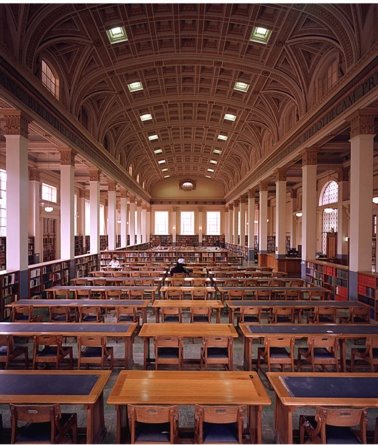
Reading Room
Excerpted from Thomas Bernhard, Old Masters: A Comedy:
'I have, in my life, turned pages a million times more often than I have read them, and always derived from turning pages at least as much pleasure and real intellectual enjoyment as from reading. Surely it is better to read altogether only three pages of a four-hundred-page book a thousand times more thoroughly than the normal reader who reads everything but does not read a single page thoroughly, he said. It is better to read twelve lines of a book with the utmost intensity and thus to penetrate into them to the full, as one might say, rather than read the whole book as the normal reader does, who in the end knows the book he has read no more than an air passenger who knows the landscape he overflies. He does not perceive the contours. Thus all people nowadays read everything and know nothing. I enter into a book and settle in it, neck and crop, you should realize, in one or two pages of a philosophical essay as if I were entering a landscape, a piece of nature, a state organism, a detail of the earth, if you like, in order to penetrate into it entirely and not just with half my strength or half-heartedly, in order to explore it and then, having explored it with all the thoroughness at my disposal, drawing conclusions as to the whole. He who reads everything has understood nothing, he said. It is not necessary to read all of Goethe or all of Kant, it is not necessary to read all of Schopenhauer; a few pages of 'Werther', a few pages of 'Elective Affinities' and we know more in the end about the two books than if we had read them from beginning to end, which would anyway deprive us of the purest enjoyment.'