4.9.14

The Life and Influence of Walter Benjamin

On the tragic life and enduring influence of the German literary critic
Walter Benjamin
From Ian Penman (City Journal):
Nearly 75 years ago, at the outset of World War Two, stranded between official borderlines, right on the edge of things, the German Jewish philosopher and critic Walter Benjamin slipped out of life. His passing barely registered beyond a small circle of friends and fellow travelers—habitués, like himself, of severe literary journals, fringe politics, esoteric philosophies. Like that of Benjamin’s own literary heroes, Franz Kafka and Marcel Proust, his posthumous career was to prove far more lively. These days, anyone tilling the stony fields of literary or political theory would soon find himself persona non grata if he didn’t pay due obeisance to Benjamin—at least, the version of him now favored: the presiding angel over all that is left-leaning, interdisciplinary, and media-studious.

In the immediate aftermath of the war, though, Benjamin’s work fell into relative obscurity. At the time, only a tiny portion of his rich and varied writing had been translated from German into English or French. What was available was hard to label and difficult to promote. Benjamin was more renowned for what most of us (i.e., those of us not fluent in German) could not read rather than for what we could. Introductory essays by Hannah Arendt, Susan Sontag, and his friend Gershom Scholem filled in some of the background, but back when I first encountered his work, there was little to choose from.

A lifetime on, and things look very different. From out of privation, we now have: four hefty volumes of Benjamin’s Selected Writings and his huge, genre-defying Arcades Project; Momme Brodersen’s exemplary Walter Benjamin: A Biography; countless secondary studies and various memoirs; a gorgeous mocked-up Archive, which reproduces texts, notebooks, and other scraps in eye-straining detail; and two novels dedicated to his shade (Benjamin’s Crossing, by Jay Parini; and The Angel of History, by Bruno Arapaia). Most recently, Howard Eiland and Michael E. Jennings have given us the sturdy Walter Benjamin: A Critical Life, published by Harvard University Press. If the lion’s share of previously untranslated work finally appeared in the last decade, there still isn’t anything like a helpful “Best of Benjamin.” (Arendt’s 1955 selection, Illuminations, remains the best place to begin.) One reason may be that new readers who come to Benjamin end up recasting him in their own image.

Benjamin lived and worked just on the cusp of the current epoch of inescapable popular culture and omnipresent media. “Criticism,” he observed, “is a matter of correct distancing. It was at home in a world where perspectives and prospects counted and where it was still possible to adopt a standpoint. Now things press too urgently on human society.” This could have been written yesterday; it was published in 1928. The deeply cultured Benjamin found himself observing the slow breakdown of the very same high culture on which he depended for his daily bread. Yet he was also a fan of Hollywood films, detective fiction, and other dreamy, mainstream forms. It was one of destiny’s less congenial jokes that she took Benjamin and left us his friend Theodor Adorno, a man uniquely ill-disposed to figuring out anything of value in popular culture.

As an unashamed intellectual, Benjamin spent large portions of his life reading, writing, editing, and researching. But he was also a devoted traveler (he believed in foreign jaunts as a cure-all for most writerly ills); something of a ladies’ man; a loyal aficionado of plush casinos; and an enthusiastic dabbler in drugs. He was, in short, a logjam of contradictions: part Jewish mystic, part Marxist firebrand; skeptical priest, polite libertine. A line that Jean Cocteau devised for Orson Welles could equally apply to Benjamin: “an active loafer, a wise madman, a solitude surrounded by humanity.” [Read More]

Find Walter Benjamin on Amazon: US | UK

Also at A Piece of Monologue:
16.12.13

Famous Writers’ Sleeping Habits

A visualisation of rising times set against literary productivity
Click for source
From Brain Pickings (thanks to Michael John Goodman for the link):
Over the years, in my endless fascination with daily routines, I found myself especially intrigued by successful writers’ sleep habits — after all, it’s been argued that “sleep is the best (and easiest) creative aphrodisiac” and science tells us that it impacts everything from our moods to our brain development to our every waking moment. I found myself wondering whether there might be a correlation between sleep habits and literary productivity. The challenge, of course, is that data on each of these variables is hard to find, hard to quantify, or both. So I turned to Italian information designer Giorgia Lupi and her team at Accurat — who make masterful visualizations of cultural phenomena seemingly impossible to quantify — and, together, we set out to explore whether it might be possible to visualize such a correlation.

First, I handed them my notes on writers’ wake-up times, amassed over years of reading biographies, interviews, journals, and other materials. Many came from two books — Daily Rituals: How Artists Work by Mason Currey and Odd Type Writers: From Joyce and Dickens to Wharton and Welty, the Obsessive Habits and Quirky Techniques of Great Authors by Celia Blue Johnson — as well as from the Paris Review interviews and various collections of diaries and letters.

We ended up with a roster of thirty-seven writers for whom wake-up times were available — this became the base data set, around which we set out to quantify, then visualize, the literary productivity of each author. [Read More]

Also at A Piece of Monologue:
13.1.13

László Krasznahorkai: Similar Writers

Stephen Sparks identifies a number of like-minded artists
László Krasznahorkai
Stephen Sparks (Tin House): 'In March of last year, English-language readers were finally presented with Satantango, the first novel by Laszlo Krasznahorkai, the writer Susan Sontag once called “the contemporary Hungarian master of the apocalypse.” The novel, considered a masterpiece in the author’s native country since its original publication in 1985, adds to his work now available in English, revealing in the process one of the most singular oeuvres in contemporary literature. And, though the time between translations of Krasznahorkai’s novels appears to be shortening (New Directions will publish his Seiobo next spring), readers suffering withdrawal from his bleak, absurdist universe have much to explore. Below is a short, non-exhaustive list of writers, all Mittel-European, who share affinities with Krasznahorkai.' [Read More]

Also at A Piece of Monologue:
22.10.12

Susan Sontag, On Photography

Darran Anderson gathers together some of the photographs
Walt Whitman
Darran Anderson on Susan Sontag's On Photography (link via 3:AM Magazine):
In the battered Penguin paperback edition that I’ve been reading there were no examples of the many photographs which Sontag referred to in the text, photographs that are freely available, though scattered, around the internet. So for my own benefit and hopefully that of others, I’ve put together links to as many of the images (and photographers) as I could find online with the corresponding page references and quotes from her work (copyright restrictions prevent me from posting them directly here). I hope you find it useful and if you haven’t read the book I strongly recommend it as one of those texts that changes the way you see things and not just in terms of photography. [Read More]
Also at A Piece of Monologue:
22.8.12

W. G. Sebald on his life and work

A 2001 interview with The Guardian
W. G. Sebald
Maya Jaggi reports on her meeting with writer and academic W. G. Sebald in September 2001: 'Under lowering skies in East Anglia, days after the Manhattan apocalypse, Max Sebald is troubled by Hitler's fantasy of setting New York ablaze, as the blitz did London. The spectre of the past haunts Sebald, a German born under the Third Reich, though he was a babe-in-arms on VE Day. "I was born in May 1944 in a place the war didn't get to," he says of the Bavarian village of Wertach im Algäu. "Then you find out it was the same month when Kafka's sister was deported to Auschwitz. It's bizarre; you're pushed in a pram through the flowering meadows, and a few hundred miles to the east these horrendous things are happening. It's the chronological contiguity that makes you think it is something to do with you."' [Read More]

Also at A Piece of Monologue:
20.7.12

Robert Walser, Selected Stories

John Self reviews a recent collection of stories from the New York Review of Books (NYRB)
Robert Walser
From the excellent literary blog, Asylum: 'Walser’s Selected Stories must be a high point. Ditto by their exalted design standards: look at that cover, the delicate green and purple like colorizing effects on a black-and-white film. And the composition, or cropping, of the photograph itself: the subject – the author – to one side, as though standing proudly (or tentatively?) by his title; or, not quite in the middle of the road; or, just about to go for a walk.' You'll have to click for more. [Read More]

Also at A Piece of Monologue:
29.4.11

Trial by Ink: From Nietzsche to Belly Dancing

An eclectic collection of essays from Yahia Lababidi
Yahia Lababidi, Trial by Ink: From Nietzsche to Belly Dancing
Egyptian writer Yahia Lababidi has just released a collection of essays on a diverse range of topics, disrupting traditional categories of popular culture, literature and philosophy. Among the topics under discussion are Susan Sontag, Oscar Wilde, Silence, Michael Jackson, Morrissey, Leonard Cohen, and Islamic faith. And there is much more besides. Here is a brief excerpt from the preface:
Essai is French for “trial.” In his collected Essais, published in 1580, Michel de Montaigne admirably set out to interrogate and discover himself and, in the process, minted a new literary form: the essay. “I cannot give an account of my life by my actions… I do so by my thoughts,” he stated in his celebrated essay, On Vanity (though he may as well have been declaring the intent of his entire project). In “How Beautiful It Is…” a more recent practitioner of this literary art, Daniel Mendelsohn, offers us another useful etymology: namely that ‘the word critic is indirectly derived from the Classical Greek word krino, “to judge.” Mendelsohn then goes on to introduce his work thus: “This book is a collection of judgments: which is to say, a collection of essays by a critic.” [...] These are my trials, where I am simultaneously scratching my head and my pen across paper, to determine what I think about a given subject.
Publisher's website: The Humanities: Yahia Lababidi, Trial by Ink: From Nietzsche to Belly Dancing
24.4.11

Disjecta: This week's links

Your guide to this week's best cultural links
James Joyce. Photograph: Roger Viollet/AFP/Getty

Literature:

Ready Steady Book: A crisp new design
Samuel Beckett: Research Day Seminar at the University of Reading, May 2011
Samuel Beckett: Nohow On: Company, Ill Seen Ill Said, Worstward Ho (PDF)
Samuel Beckett: The novelist, poet and playwright discusses form with Harold Pinter
Samuel Beckett: Thomas Pors Koed on impersonal subjectivity and The Unnamable
Samuel Beckett: Continuum offers a free online extract from Jonathan Boulter's study, Beckett: A Guide for the Perplexed
Writers and Kitties: Includes Samuel Beckett, Joyce Carol Oates, William S. Burroughs and others
James Joyce: Finnegans Wake and the Nazi Occupation
James Joyce: Passages from Finnegans Wake: The Film
James Joyce: Singer Kate Bush given permission to use extracts from Ulysses by the Joyce estate
An annotated, online edition of Finnegans Wake
Anaïs Nin’s Silver Lake Home
Penguin Threads Deluxe Classics: Embroidered covers of classic novels
A Bookless Library?
Harold Pinter: Blake Morrison reviews a recent production of Pinter's Moonlight
Picture Books: A letter to the New York Times stresses the continuing importance of picture books
Will Self: Opposed to the idle life
Franz Kafka to the Bodleian
Franz Kafka: Sleep and transformation
Joyce Carol Oates: Miranda Popkey reviews Oates' recent memoir, A Widow's Story
Joyce Carol Oates: Julian Barnes reviews A Widow's Story
What makes literature literature?
Sylvia Plath: Jacqueline Rose on her conflict with the Plath estate

Philosophy & Critical Theory:

Modernism and Nihilism: A new study by Shane Weller
At home with Susan Sontag
Walter Benjamin: Illuminations: Essays and Reflections (PDF)
Jacques Lacan at UBUWeb
Maurice Blanchot: Review of the recently published Political Writings: 1952-1993
Maurice Blanchot: HTMLGiant reviews Blanchot's Aminadab
Dante Alighieri: Steve Donoghue reviews David Slavitt's new translation of La Vita Nuova

Theatre

Samuel Beckett: Continuum offers a free online extract from its Online Theatre Guide to Waiting for Godot
How Shakespeare Invented Teenagers
The Original Portrait of William Shakespeare

Film:

Woody Allen: The Guardian on Woody Allen's long association with the Windsor typeface
William Shakespeare: Alan A. Stone reviews Julie Taymor's recent adaptation of Shakespeare's The Tempest
David Lynch: 60-Second claymation adaptation of Lynch's midnight movie classic, Eraserhead

Thank you to all link contributions, which can be found on the A Piece of Monologue Twitter page.
23.1.11

Disjecta: This week's links

Your guide to this week's best cultural links
Bob Dylan. Photograph: Daniel Kramer.

Literature:

London Review of Books: Winter Lecture s 2011: Includes Judith Butler on Franz Kafka, T. J. Clark on Picasso's Guernica and Elif Batuman on Cervantes and Balzac.
Joycean Literature: Fiction and Poetry 1910-2010: An academic conference to be held at the University of London, June 2011
James Joyce & Samuel Beckett: Top 10 Literary Mentorships
Joyce Carol Oates: New short story collection, Give Me Your Heart
Thomas Bernhard: German television documentary, spanning 1967-88
Beat Generation: Neal Cassady's wife, Carolyn, is interviewed by The Guardian on life with the Beats
J. D. Salinger: David L. Ulin reviews Jeffrey Slawenski's J. D. Salinger: A Life
Jorge Luis Borges: Martin Schifino reviews five new anthologies of the Borges' work
Jorge Luis Borges: The Riddle of Poetry, a lecture delivered at Harvard University 1967.
H. P. Lovecraft: GalleyCat presents a free documentary
Edgar Allan Poe: For the second time in two years, the mysterious 'Poe Toaster' fails to appear at the writer's gravesite

Philosophy & Critical Theory:

Roland Barthes: Columbia University Press publishes The Preparation of the Novel
Roland Barthes: Mairéad Hanrahan reviews Barthes' The Preparation of the Novel in the Times Literary Supplement
Roland Barthes: University of York launches a new reading group based around Barthes' The Neutral
Susan Sontag: Varia celebrates the birthday of the renowned cultural critic
Friedrich Nietzsche: Slate on why Nietzsche is so often misunderstood by angry young men
Jacques Derrida speaks about 'Forgiveness'

Film:

65 Things You Didn't Know About David Lynch

Art & Design

Ezra Stoller: Exploring Mad Men era New York through the photography of Ezra Stoller

Theatre

Thomas Bernhard: A translation of Elisabeth II
Frankenstein: The Guardian on Danny Boyle's new production at the National
Theatre and Performance: An online preview

Music

Bob Dylan: American musician signs six-book deal, which will include two further volumes in the Chronicles series
Patti Smith appears on Charlie Rose
Joy Division: Recordings from two Dutch concerts

Etc.

Woody Allen: 'Money Can Buy Happiness-As If', in the New Yorker
Thank you to all link contributions, which can be found on the A Piece of Monologue Twitter page.
4.1.11

Top 10 Books About Books

John Sutherland on classic works of literary criticism
Roland Barthes
The Guardian's John Sutherland guides us through his list of essential literary criticism, ranging from Greek philosophy to contemporary critical theory. To read more about his selections, click on the link below.
  1. Aristotle, The Poetics (Ingram Bywater translation)
  2. Susan Sontag, Against Interpretation (1966)
  3. Stanley Fish, Is there a Text in this Class? (1980)
  4. Elaine Showalter, A Literature of their Own (1978)
  5. Roland Barthes, S/Z (1977: Richard Miller translation)
  6. Frank Kermode, The Sense of an Ending (revised edition, 2000)
  7. Terry Eagleton, Marxism and Literary Criticism (1976)
  8. Stephen Greenblatt, Renaissance Self-Fashioning (1980)
  9. Christopher Ricks, Milton's Grand Style (1963)
  10. Henry Louis Gates Jr, The Signifying Monkey (1988)
Source: John Sutherland, 'Top 10 books about books', guardian.co.uk, 30 December 2010
3.8.10

Waiting for Godot: Khayelitsha, South Africa

Sean Mathias' successful production of Samuel Beckett's play to be performed in Khayelitsha, South Africa
Samuel Beckett's Waiting for Godot moves to South Africa
Ian McKellen and Roger Rees in Waiting for Godot. Source.
After a successful run in London's West End, Sean Matthias took a production of Beckett's Waiting for Godot to Australia and New Zealand. Now, the director leads a cast of actors, including Sir Ian McKellen, to South Africa. David Smith, writing from Johannesburg, has the details:
He failed to appear in Paris, London, New Orleans, Sarajevo or San Quentin. So the people of Khayelitsha, one of South Africa's biggest townships, shouldn't be surprised if Godot keeps them waiting too.

But tomorrow , they will at least get Sir Ian McKellen and the hit British production of Samuel Beckett's Waiting for Godot in a one-off performance at the township's OR Tambo sports centre.

Theatre is normally beyond the reach of most residents of Khayelitsha, on the outskirts of Cape Town, where an estimated half of households struggle to afford one meal a day. But audience members for Godot will only be asked to pay what they can afford, with tickets going on sale three hours before curtain up.

[...]

Khayelitsha, a place long notorious for violent crime, will add a new chapter to the diverse history of Godot, famously described as "a play in which nothing happens, twice" and endlessly resonant across time and space. Memorable productions have been staged in a besieged Sarajevo in 1993, California's San Quentin prison and in New Orleans after hurricane Katrina.

Susan Sontag, who directed Godot in a besieged Sarajevo in 1993, declared: "Beckett's play, written over 40 years ago, seems written for, and about, Sarajevo".

South Africa itself witnessed an all-black, apartheid-era production at the Market Theatre in Johannesburg in 1976. Benjy Francis, its director and star, told the Observer last year: "Every night, the show received standing ovations. Its impact was monumental: Waiting for Godot provided a powerful metaphor of our struggle which allowed me to get past the censor and speak to my people." [Read the article]

Also at A Piece of Monologue:
18.7.10

Disjecta: This week's links

James Franco as Allen Ginsberg in Howl. Promotional Poster

Promotional poster for Howl (2010)

Literature:

Philip Roth: This month's Featured Artist on A Piece of Monologue
Philip Roth: Your very own Philip Roth Desktop Wallpaper! Imagine that
Philip Roth: On Suicide and the Stage
Good Morning, Philip Roth! An extract from Portnoy's Complaint
Franz Kafka: Safety Deposit Boxes containing documents by Kafka and Max Brod to be opened
Susan Sontag: Audio interview (2000) with Robert Stone and William Styron
Will Self and Martin Amis at the Shakespeare & Co. Festival
James Joyce: Mills Baker on the Irish writer's daughter, Lucia Joyce
Allen Ginsberg: New trailer for Howl, a film about Ginsberg and the Beat Generation
William Faulkner: An audio archive with transcripts of Faulkner's audience sessions in Virginia
The Lure of Writers' Houses
The Art of Slow Reading
Don DeLillo: Granta publishes 'At Yankee Stadium' to read online
The Bookcase You'll Want to Live In
Who Do You Write Like?
Sylvia Plath: The Bed Book, a book for children
Penguin Books 75: A Q&A with Paul Buckley and Christopher Brand
Thomas Bernhard: Four new Bernhard books to be published in English for the first time

Philosophy:

Sigmund Freud on the BBC

Music

Manic Street Preachers: New book, Richard: The Life and Disappearance of Richey Edwards

Theatre

Samuel Beckett: French Culture Broadcasts of Beckett's work

Film & Television:

Seinfeld: Lessons and Hugs. Spoof trailer for George
David Lynch: Lynch and Danger Mouse give audio interview
Andrei Tarkovsky: Films now available to watch free online

Art:

Harvey Pekar 1939-2010: Reviews and clips from Pekar's life and career
Harvey Pekar 1939-2010: Los Angeles Times reports the passing of Harvey Pekar
Harvey Pekar 1939-2010: The Guardian notes the passing of the American Splendor creator
Robert Crumb: R. Crumb's Depression Graph

Etc.

Will Self on The Daily Mail

Thank you to all link contributors, who can be found on the A Piece of Monologue Twitter page.
4.1.10

On Albert Camus

Anniversary retrospective
Albert Camus reading a newspaper

A brief round-up of retrospectives on the Algerian philosopher Albert Camus, who was killed in a car crash fifty years ago today:

On Camus' lasting influence on popular culture:
No doubt Camus would have derived at least a moderate pleasure from his celebrity status. In his favorite photograph of himself, taken by Cartier Bresson, he’s wearing a trench coat (supposedly a gift from Arthur Koestler’s wife) and smoking a cigarette, and he loved it when his friends told him that he looked like Bogart in the picture. One wonders if French critics’ love affair avec Bogie didn’t begin with that photo. After all, as Susan Sontag wrote in her famous 1963 essay, “No modern writer I can think of, except Camus, has aroused love.”

But, as Sontag asked rhetorically, “Was Camus a thinker of importance?” Her answer was an emphatic no: “Sartre, however distasteful certain of his political sympathies are to his English-speaking audience, brings a powerful and original mind to philosophical, psychological, and literary analysis. Camus, however attractive his political sympathies, does not.” In his 2007 book, Cultural Amnesia, Clive James, in effect, replied to Sontag: “the widespread notion that Camus’ mind was not really very complex is the penalty he paid for being blessed with good looks, a Nobel Prize, too many women, and too much fame.”

As Sontag herself was to understand, the attractiveness of political sympathies changes, and with them a writer’s reputation. Less than two decades after her essay on Camus, it was Sontag who was saying things like “communism is fascism, with a human face”—essentially what Camus had been saying since his break with the French Left after the publication of L’Homme revolte (The Rebel) in 1951. In the words of Olivier Todd, “Camus was correct too early.” [Read More]

On Camus' journals:
The last collection of Camus’s notebooks (1951-1959) were withheld from publication in France for nearly 30 years after his death, and did not appear in English until 2008. The publisher’s blurb says this: ‘Camus’s final journals give us our rawest and most intimate glimpse yet into one of the most important voices of French letters and twentieth-century literature. The first two volumes of his Notebooks began as simple instruments of his work; this final volume, recorded over the last nine years of his life, take on the characteristics of a more personal diary. Fearing that his memory was beginning to fail him, Camus noted here his reactions to the polemics stirred by The Rebel, his feelings about the Algerian War, his sojourns in Greece and Italy, thinly veiled observations on his wife and lovers, heartaches over his family, and anxiety over the Nobel Prize that he was awarded in 1957.’ [Read more]

On Camus' death:
Then, 50 years ago today, at the age of 46, [Albert Camus] died in a car accident near Sens, in a place named Le Grand Fossard in the small town of Villeblevin. Wikipedia tells me that "in his coat pocket lay an unused train ticket. He had planned to travel by train, with his wife and children, but at the last minute accepted his publisher's proposal to travel with him. The driver of the Facel Vega car, Michel Gallimard — his publisher and close friend — was also killed in the accident." In the car was the manuscript for The First Man (Le premier homme) an autobiographical work about his childhood in Algeria and was published in 1995. [Read More]

On Camus and solidarity:
“Misery taught me that not all goes right under the sun or in the story; the sun taught me that the story is not everything.” Camus was born in a poor quarter of Algiers to a father who soon died in battle and an illiterate, deaf mother, worn through by perpetual work, whose only bond with her son was love. His early life was a tension between opposites: ugly, insistent poverty and the serene, indifferent beauty of the sun and sparkling sea; silence and the seductive pleasure of words; resentment and the release of sport. His family held him back; he rebelled, successfully – but in escaping, he found he was also exiled, never again to feel an easy fit between himself and his surroundings. His work would circle among these themes for the rest of his life, fluttering here and there like a bird that finds no perch.

“Man is the only creature who refuses to be who he is.” As a writer and a Frenchman, Camus could not simply have feelings – he had to explain them. Though his explanations gained him an international audience (and the Nobel prize), they became a self-defeating exercise. The absurdity of humanity’s desire for reason and happiness in the face of the world’s “unreasonable silence” was worth pointing out – but Camus was too genuine to stop there, lean back, and light another cigarette. He could not, like Sartre, content himself with having made everyone uncomfortable – he was uncomfortable himself, because he knew that “there is something that still means something.” But what? [Read More]

2.1.10

Edmund White on Susan Sontag

Edmund White remembers Susan Sontag, who passed away in 2004:
Susan Sontag
Susan Sontag was one of the last public intellectuals in America. Though she sometimes taught, she hated teaching. Unlike an academic, her interests were far-ranging. She wrote about the movies, about such key French writers as Roland Barthes and Antonin Artaud, about photography, about cancer, about Aids, about fascism – and she wrote two big, ambitious novels towards the end of her life. She wrote plays and directed some, directed movies, appeared on endless panels discussing countless topics. When Elias Canetti won the Nobel prize, Susan's was the only essay about him in English. She was the first one I knew to mention WG Sebald, Danilo Kiš and Roberto Bolaño – all considered major literary figures now.

Sontag also took unpopular political positions. On 6 February 1982 she delivered a speech at Town Hall in New York in which she denounced communism as a form of fascism, which enraged the left. After 9/11 she offended everyone by writing in the New Yorker that it was foolish to describe the suicide pilots who flew into the World Trade Centre as "cowards".

Since her death several people who knew her have written disobliging portraits of her. I tried to make mine in City Boy even-handed but, like the other writers no doubt, I was surprised by the depth of my wounded and negative feelings. She could be high-handed and dismissive, probably the result of her being so famous throughout her life; for every old friend who fell by the wayside there were a hundred new candidates springing up in her path.

I once told her I wanted to write a biography of her called The Dandy and the Rabbi; she quickly substituted the word "Priest", since (like Proust) she preferred the "universality" of Catholicism to what she perceived as the singularity of Judaism. What I meant by the title was that when she was with moralists she'd become an aesthete, but when she was surrounded by aesthetes she'd take a high moral tone. Those did seem to be the opposing forces in her intellectual life – and they generated a fascinating discourse over many decades. She was irreplaceable and she won't be replaced.

1.11.09

Susan Sontag on Simone Weil

An excerpt from Against Interpretation

Mark Thwaite at ReadySteadyBook quotes Susan Sontag on Simone Weil:
The culture-heroes of our liberal bourgeois civilization are anti-liberal and anti-bourgeois; they are writers who are repetitive, obsessive, and impolite, who impress by force—not simply by their tone of personal authority and by their intellectual ardor, but by the sense of acute personal and intellectual extremity. The bigots, the hysterics, the destroyers of the self—these are the writers who bear witness to the fearful polite time in which we live. It is mostly a matter of tone: it is hardly possible to give credence to ideas uttered in the impersonal tones of sanity. There are certain eras which are too complex, too deafened by contradictory historical and intellectual experiences, to hear the voice of sanity. Sanity becomes compromise, evasion, a lie. Ours is an age which consciously pursues health, and yet only believes in the reality of sickness. The truths we respect are those born of affliction. We measure truth in terms of the cost to the writer in suffering—rather than by the standard of an objective truth to which a writer's words correspond. Each of our truths must have a martyr.

What revolted the mature Goethe in the young Kleist, who submitted his work to the elder statesman of German letters "on the knees of his heart"—the morbid, the hysterical, the sense of the unhealthy, the enormous indulgence in suffering out of which Kliest's plays and tales were mined—is just what we value today. Today Kleist gives pleasure, Goethe is to some a duty. In the same way, such writers as Kierkegaard, Nietzsche, Dostoyevsky, Kafka, Baudelaire, Rimbaud, Genet—and Simone Weil—have their authority with us because of their air of unhealthiness. Their unhealthiness is their soundness, and is what carries conviction. [Read More]

Susan Sontag, 'Simone Weil'
in Against Interpretation and Other Essays
14.9.09

Writers' Autographs

An online signature gallery of some of the world's best known writers
Photograph by Ralph Gibson. Series: Ex Libris. 2001
I have a long-standing fascination with handwriting and typography. The shape of letters and the visual appearance of sentences can contribute just as much meaning to a reader as the words themselves; a fact that the advertising industry is quick to capitalize on.

Writers' signatures hold a particular grip on me, not least for the romantic idea that they bring us closer to the personality of the writers themselves. If we feel close to an author's work, there are times when the printed word can feel like a barrier between us and the original manuscript. A signature offers a stamp of the writer's character and humanity; and in this sense, a signed book can feel like a personal validation of the work.

I've compiled a number of autographs here that, for one reason or another, have caught my attention. Enjoy!


Samuel Beckett


Joyce Carol Oates


Paul Auster


Anthony Burgess


William S. Burroughs


Don DeLillo


Fyodor Dostoyevsky


T. S. Eliot


William Faulkner


Robert Frost


Franz Kafka


Jack Kerouac


Harper Lee

Philip Roth


J. D. Salinger


Jean-Paul Sartre


Jacques Derrida


James Joyce


Susan Sontag


John Steinbeck


Thomas Mann


Leo Tolstoy


Oscar Wilde


Emile Zola
More
27.7.09

Writers interviewed in The Paris Review

Now available to read online
Philip Roth in 1964, two years after the publication of 'Letting Go.'I've spent most of the morning perusing the vast online interview archive of The Paris Review, which spans back to the early 1950s. Here are just a few of the names that caught my eye:
26.6.09

William Burroughs and Susan Sontag on meeting Beckett

American writer and critic meet with Nobel Prize winner in Berlin
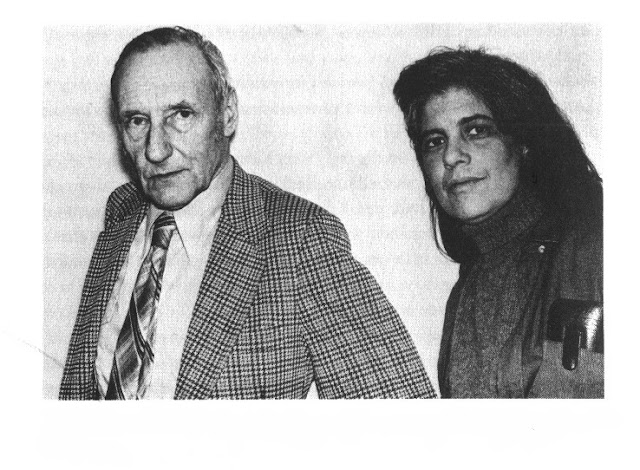
William Burroughs and Susan Sontag after dinner at Victor BOCKRIS' apartment. Photo Gerard MalangaI spent some time rearranging books this afternoon. Among the shelves was an old copy of With William Burroughs: A Report from the Bunker, a collection of interviews and candid conversations with the American writer, recorded and transcribed by the counter-cultural biographer Victor Bockris. What is particularly interesting about the collection, to my mind, is the way it records not just the outlook of one of America's greatest authors, but catches an impression of his social circle in the 1970s and '80s.

Among the dinner parties and celebrity get-togethers are appearances from Lou Reed, Andy Warhol, and even Mick Jagger - all of whom are more than willing to share their thoughts on art, music, literature and the counter-cultural movement. The conversations recorded provide a sharp and often entertaining insight into Burroughs's mind, and an intimate glimpse of his ever-present celebrity entourage at a particular cultural moment.

One of the sections that caught my eye, for reasons that are probably obvious, details a conversation between Victor Bockris, William Burroughs and the writer Susan Sontag. Burroughs and Sontag share their experiences and reflections on meeting Irish author and playwright Samuel Beckett in Berlin:
Dinner with Susan Sontag, Maurice Girodias: New York, 1980.

Susan Sontag: It all started like this: we were staying in this picturesque hotel in Berlin and Allen Ginsberg said, "We're going to see Beckett, c'mon," and I said, "Oh, William [Burroughs] are you are going, I don't want to butt in," and he said, "No, c'mon, c'mon," and we went. We knocked on the door of this beautiful atelier with great double height ceilings, very white. This beautiful, very thin man who tilts forward when he stands answered the door. He was alone. Everything was very clean and bare and white. I actually had seen him the day before on the grounds of the theater of the Akademie Der Kunst. Beckett comes to Berlin because he knows his privacy will be respected. He received us in a very courtly way and we sat at a very big long table. He waited for us to talk. Allen was, as usual, very forthcoming and did a great deal of talking. He did manage to draw Beckett out asking him about Joyce. That was somehow deeply embarrassing to me. Then we talked about singing, and Beckett and Allen began to sing while I was getting more and more embarrassed.

Victor Bockris: Bill [William Burroughs] says Beckett made you feel as if you would be welcome to leave as soon as you could.

Sontag: He didn't actually throw us out.

William Burroughs: Oh, the hell he didn't! See, I have an entirely different slant on the whole thing. In the first place, John Calder said, "Bring along some liquor," which we did. I know that Beckett considers other people different from him and he doesn't really like to see them. He's got nothing particular against the being there, it's just that there are limits to how long he can stand being with people. So I figured that about twenty minutes would be enough. Someone brought up the fact that my son was due for transplants, and Beckett talked about the problem of rejection, about which he'd read an article. I don't remember this singing episode at all. You see Susan says it seemed long, it seemed to me extremely short. Soon after we got there, and the talk about transplant, everybody looked at their watch, and it was very obviously time to go. We'd only brought along a pint and it had disappeared by that time.

Sontag: Allen said, "What was it like to be with Joyce? I understand Joyce had a beautiful voice, and that he liked to sing." Allen did some kind of "OM" and Beckett said, "Yes, indeed he had a beautiful voice," and I kept thinking what a beautiful voice he had. I had seen Beckett before in a café in Paris, but I had never heard him speak and I was struck by the Irish accent. After more than half a century in France he has a very pure speech which is unmarked by living abroad. I know hardly anybody who's younger than Beckett, who has spent a great deal of time abroad who hasn't in some way adjusted his or her speech to living abroad. There's always a kind of deliberateness or an accommodation to the fact that even when you speak your own language you're speaking to people whose first language it's not and Beckett didn't seem in any way like someone who has lived most of his life in a country that was not the country of his original speech. He has a beautiful Irish musical voice. I don't remember that he made us feel we had to go, but I think we all felt we couldn't stay very long.

Bockris: Did you feel the psychic push? That Beckett had "placed" you outside the room?

Burroughs: Everybody knew that they weren't supposed to stay very long. I think it was ten minutes after six that we got out of there. [...] He gave me one of the greatest compliment that I ever heard. Someone asked him, "What do you think of Burroughs?" and he said - grudgingly - "Well, he's a writer."

Sontag: High praise indeed.

Burroughs: I esteemed it very highly. Someone who really knows about writing, or say about medicine says, "Well, he's a doctor. He gets in the operating room and he knows what he's doing."

Sontag: But at the same time you thought he was hostile to some of your procedures?

Burroughs: Yes, he was, and we talked about that very briefly when we first came in during the Berlin visit. He remembered perfectly the occasion.

Sontag: Do you think he reads much?

Burroughs: I would doubt it. Beckett is someone who needs no input as such. To me it's a very relaxed feeling to be around someone who doesn't need me for anything and wouldn't care if  died right there the next minute. Most people have to get themselves needed or noticed. I don't have that feeling at all. But there's no point in being there, because he had no desire or need to see people.

Bockris: How did you feel when you left that meeting?

Sontag: I was very glad I had seen him. I was more interested just to see what he looks like, if he was as good-looking as he is in photos.

Burroughs: He looked very well and in very good shape. Beckett is about seventy-five. He's very thin and his face looks quite youthful. It's really almost an Irish streetboy face. We got up and left, the visit had been, as I say, very cordial, decorous...

Sontag: More decorous than cordial I would say. It was a weightless experience, because it's true, nothing happened.

Burroughs: Nothing happened at all.

Victor Bockris, With William Burroughs: A Report from the Bunker

26.12.08

The Photography of Tom Palumbo

A selection of iconic images
'In America, the photographer is not simply the person who records the past, but the one who invents it.'
Susan Sontag
While browsing photographs of Miles Davis in the recording studio, I came by chance across the work of Tom Palumbo. He became a theatre director in his later years, but achieved primary recognition as a photographer for Vogue and Harper's Bazaar.

I've spent the better half of an hour poring over Palumbo's work, and love the way he's mastered both style and simplicity, sometimes in a single shot. There are colour photographs of water or floral arrangements that are at once glorious to look at and strongly nostalgic. On the other hand, there are simple black-and-white portraits of the famous and the notable that feel real and uncontrived, but are no less evocative for that.

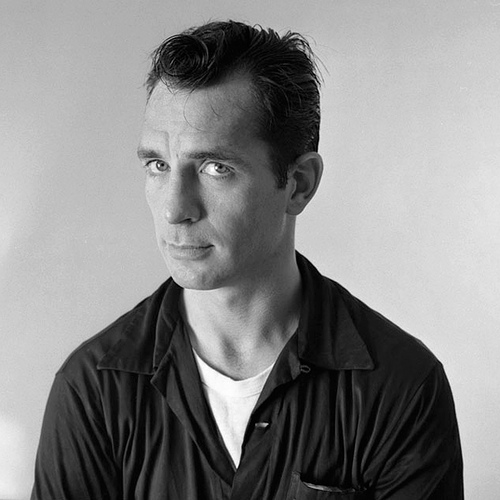
Jack Kerouac. Photograph by Tom Palumbo.
Palumbo passed away in October 2008, but created and maintained a personal account on Flickr. This was run in addition to his official website, but allows browsers direct access to the photographs themselves. So instead of being trapped in an endless slideshow of slow-moving images, Flickr allows you to view his work in a more direct way.

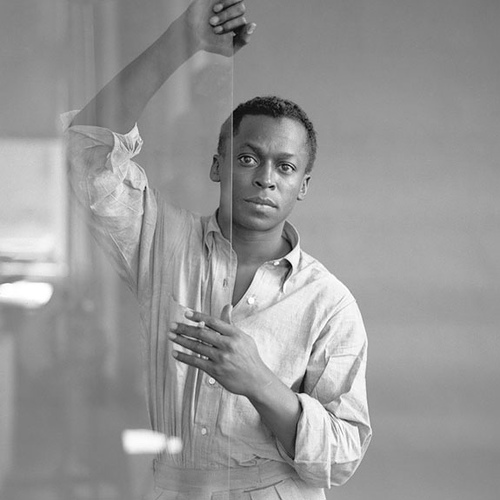
The photographs are divided into neat categories, and range from the personal domestic scenes that typify his early work to intimate portraits of celebrities and American icons. There are some superb shots of Beat writer Jack Kerouac, who looks almost like a real person rather than a mystical literary figure. And there are some playful stills of jazz trumpeter Miles Davis in numerous poses. Looking over the selection, there are also snaps of Jane Fonda, Jimmy Stewart and a young Mia Farrow - most of which are well worth a glance.

Miles Davis. Photograph taken by Tom Palumbo.
As you may have guessed, much of Palumbo's work is concerned with the American fashion and celebrity culture of the 1950s. The photographer's Italian background is also represented through a short series of native images, ranging from locations to religious festivities. But it's his work as a fashion photographer that made his reputation, and the highlight of Palumbo's Flickr gallery is undoubtedly the work for Vogue and Harpers Bazaar.

In over one hundred fashion photographs, there is an opportunity to see outtakes and off-cuts from professional magazine assignments. Perhaps the most distinctive are photographs of supermodel Anne St. Marie, who was Tom Palumbo's wife at the time the shots were taken. The colour and composition of the photographs give a certain sheen to the 1950s and early 1960s that in all likelihood never existed in reality; but the photographs are compelling for this very reason. They are nostalgic in the sense that they create a past just as much as they represent it.

All of Palumbo's photographs have been arranged in separate galleries according to theme. You can browse them at your leisure by following the link: http://www.flickr.com/photos/tompalumbo/sets/